

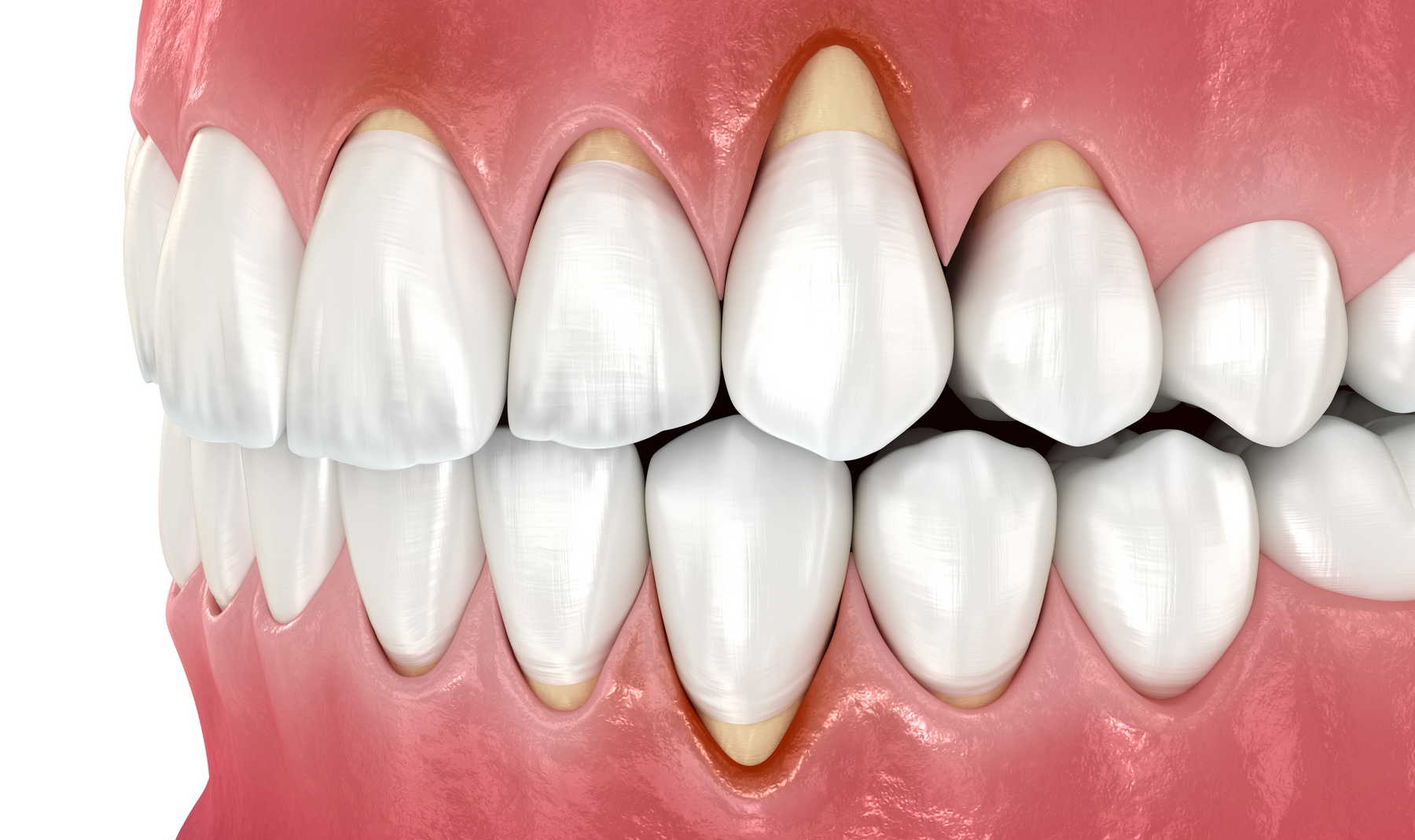
Periodontitis is a chronic inflammatory condition of the tissues that surround and support the teeth within the socket. It should not be ignored, as it is the main cause of tooth loss. If left untreated, it can cause serious problems, which are divided into 4 stages:
- Gingivitis. This is the early stage of inflammation, with irritated gums that bleed. It is reversible with good oral hygiene at home and professional teeth cleaning at the dental clinic.
- Early periodontitis. The gums are now much looser and bone loss is observed. Bleeding is more intense and bad breath is present. Treatment is carried out with root scaling at the dentist and excellent oral hygiene at home.
- Moderate periodontitis. The roots of the teeth are exposed as the gums have receded, and tooth mobility is observed. Periodontal treatment, either surgical or non-surgical, is necessary.
- Advanced periodontitis. This is the final stage, which usually leads to tooth loss.
Treatment may be non-surgical in milder cases or surgical, depending on the extent and severity of the damage.
Non-surgical treatment for mild periodontitis
Cleaning and deep root scaling
Local anaesthesia is administered to the patient, and the treatment is usually completed in 2 to 4 sessions. At our clinic, we remove tartar and bacteria deep below the gum line. We also smooth the roots of the teeth in order to prevent further plaque and bacterial accumulation.
It is important to carry out a follow-up examination after one month, so that we can reassess the gums and evaluate how well the treatment has worked.
We often prescribe oral antibiotics or may apply medication locally beneath the gums in order to act in a targeted way.
Surgical treatment for moderate to severe periodontitis
The surgical treatment of periodontitis includes various techniques, depending on the problem that needs to be addressed.
Flap surgery
The dental surgeon or periodontist makes an incision along the gum line and temporarily lifts the gums. This provides access to the roots of the teeth, as well as to the bone surrounding them, so that the affected areas can be thoroughly cleaned.
Bone grafts
These are indicated when significant bone loss is observed. The aim is to reduce the risk of future infection and tooth loss.
Gum grafts
The exposed roots of the teeth are covered with a gum graft. This improves the appearance of the smile and reduces the risk of recurrence.
Guided tissue regeneration
This is a surgical procedure that combines the placement of bone grafts and biocompatible membranes, in order to create a protected environment for the development of new healthy tissues.
Platelet-rich plasma (PRP)
PRP is a preparation made from platelets and growth factors, which significantly helps with healing and tissue regeneration.
Whatever treatment plan is decided, do not forget that meticulous and consistent daily oral hygiene will play a primary role in maintaining the result.