Wisdom teeth, also known as third molars, are the last teeth to erupt in the mouth. This usually happens between the ages of 17 and 25, and their removal is something that often concerns adolescent patients.
When should they not be extracted?
- When there is no pathology.
• When their position within the dental arch is correct and they occlude properly with the opposing teeth.
• When their position allows them to be cleaned properly.
When should they be extracted?
- When the patient is in pain.
• When there is extensive decay and the tooth can no longer be treated with root canal treatment or restored prosthetically.
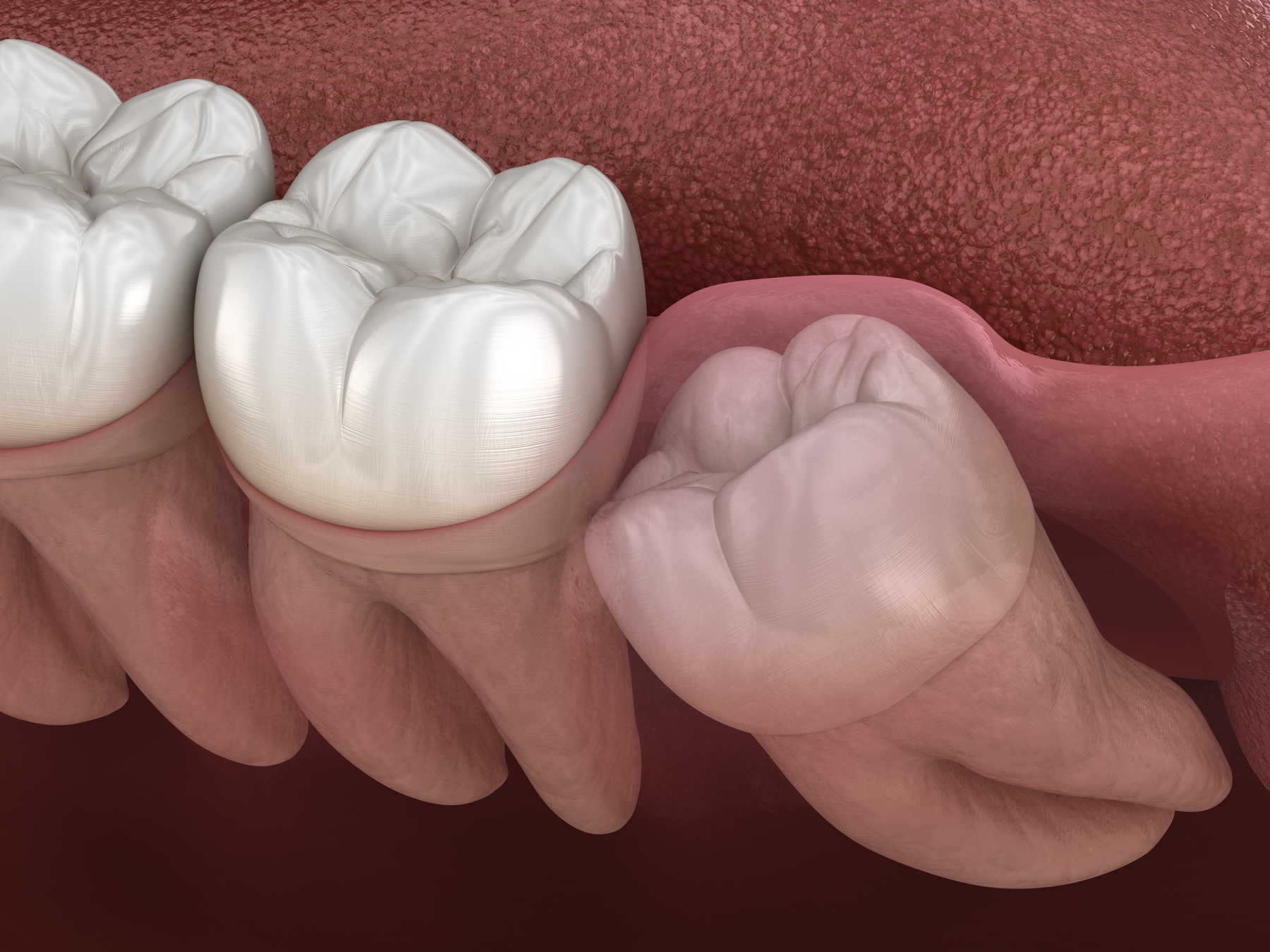
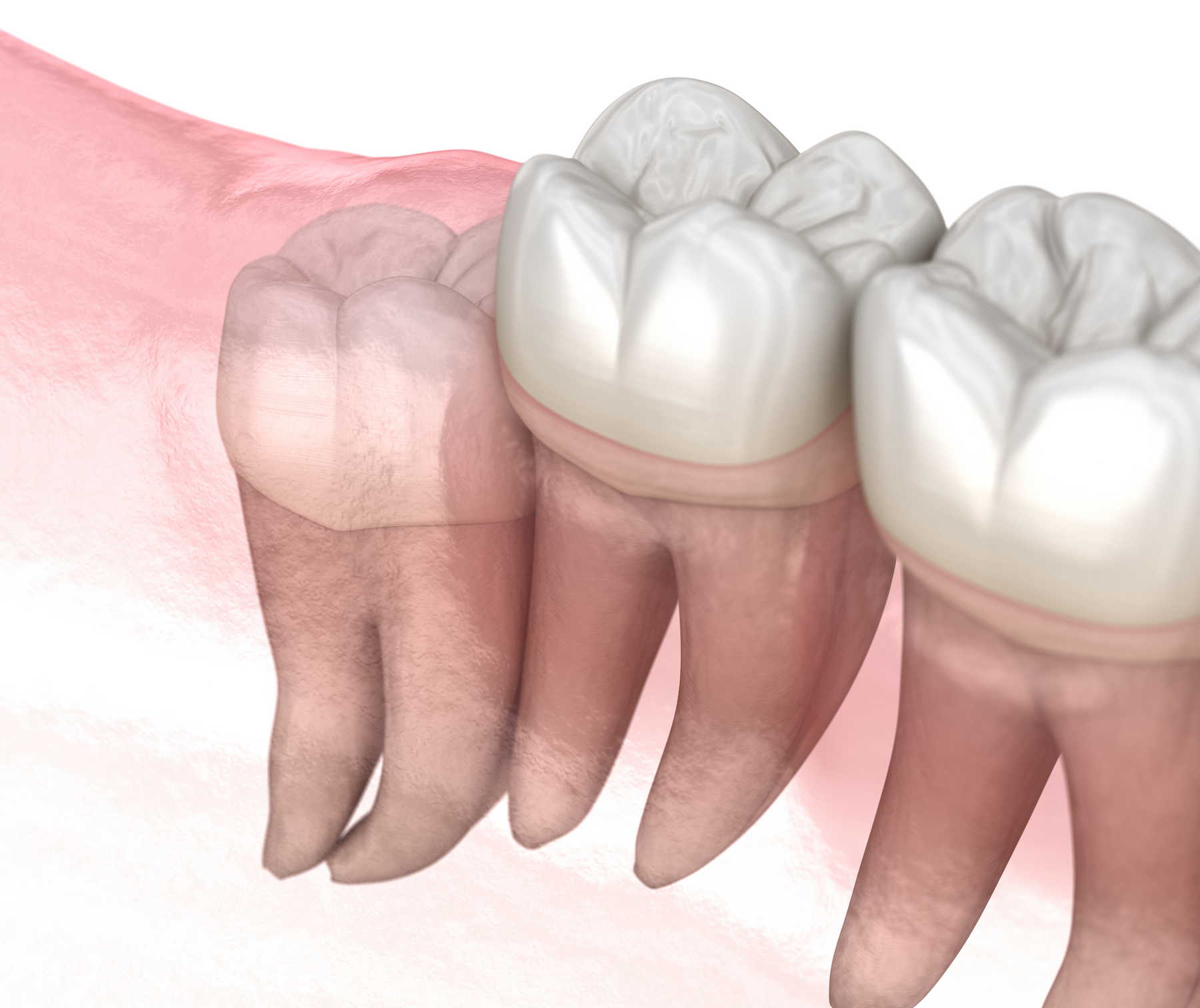
• When they are impacted and damage the adjacent teeth by exerting pressure on them.
• When they are partially impacted, meaning that only a small part of the tooth is visible beneath the gums, and food accumulates under the gum flap, leading to repeated inflammation.
• When, during eruption, they create problems for neighbouring teeth.
• When there is a periodontal problem.
• When cysts appear around impacted wisdom teeth.
• When they erupt at an incorrect angle, causing injury to the surrounding soft tissues due to poor occlusion.
• When space needs to be created during orthodontic treatment.
The decision to remove wisdom teeth is not always clear. Talk to us about the position and health of your teeth, and about what is best for your individual case.